

Choosing the right curtain style can influence the overall appearance and functionality of your room. Wave curtains and eyelet curtains are two popular options, each offering a different heading design, fabric arrangement and hanging system. While wave curtains create smooth, evenly spaced folds, eyelet curtains feature circular metal rings that form deeper, more defined folds along the top.
Both styles can complement modern interiors, but they are not suitable for every window or design preference. Factors such as window dimensions, fabric type, curtain tracks, available space and interior style can help determine which option is more suitable. Understanding their differences will make it easier to select curtains that match your requirements.
What Are Wave Curtains?
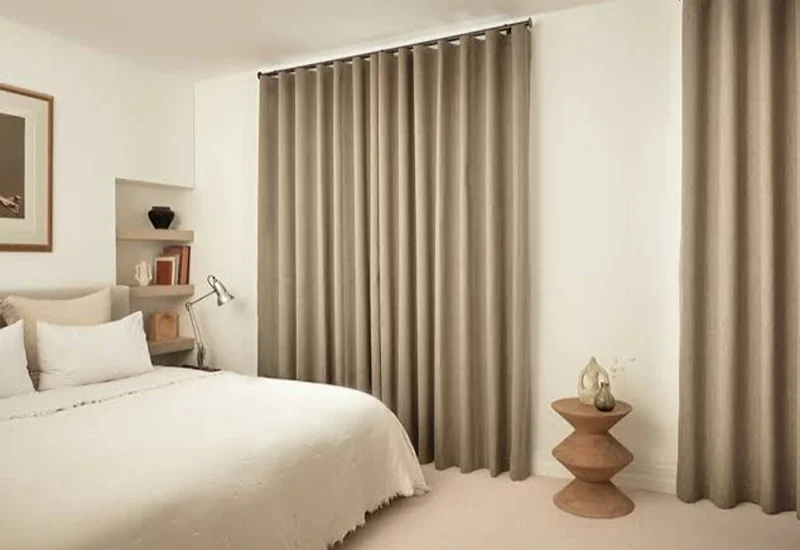
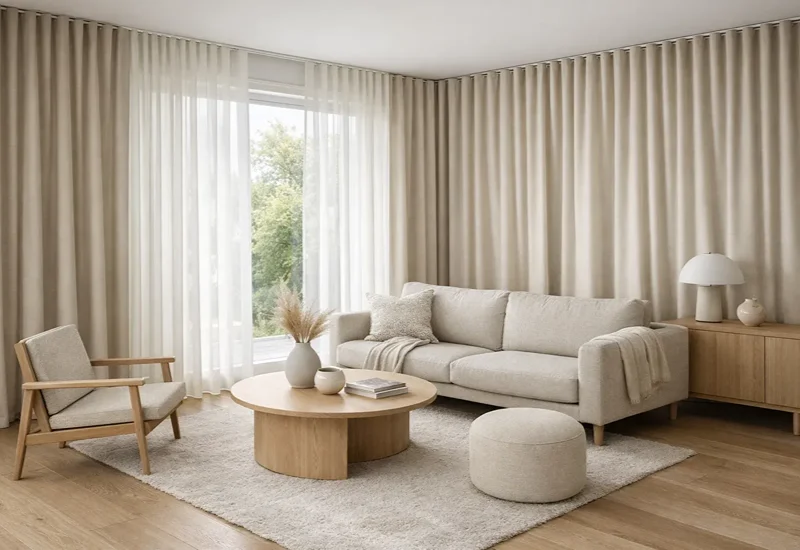
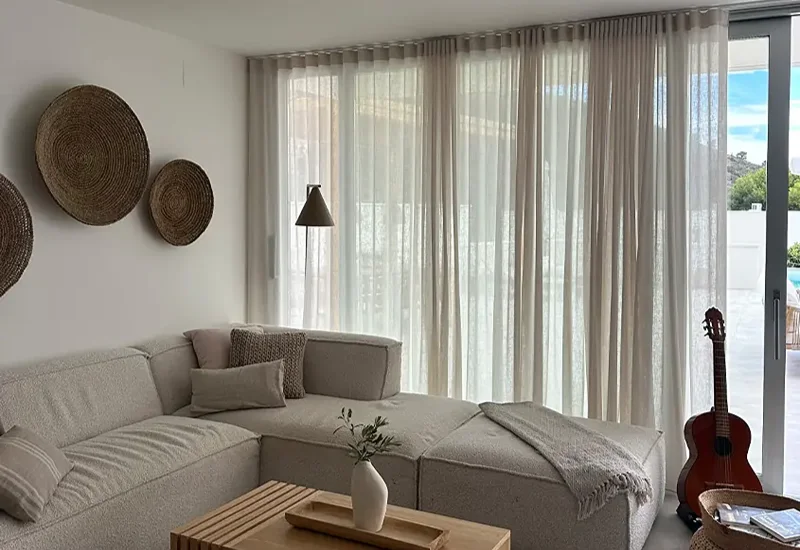
Wave curtains are designed with soft, continuous folds that create a consistent wave-like appearance across the fabric. They use specialised curtain tape and a compatible track system to maintain evenly spaced curves when the curtains are open or closed.
Unlike traditional curtain headings, wave curtains do not rely on large pleats or visible rings. Instead, their uniform arrangement creates a neat and streamlined finish. This makes them a popular choice for contemporary homes, apartments and commercial interiors where a simple window treatment is preferred.
Key Features of Wave Curtains
- Uniform folds: Create evenly spaced waves across the curtain fabric.
- Specialised track system: Require a compatible track to maintain their shape.
- Smooth operation: Move along the track when opening and closing.
- Modern appearance: Complement minimalist and contemporary interiors.
- Versatile applications: Can be used in living rooms, bedrooms and larger window areas.
What Are Eyelet Curtains?
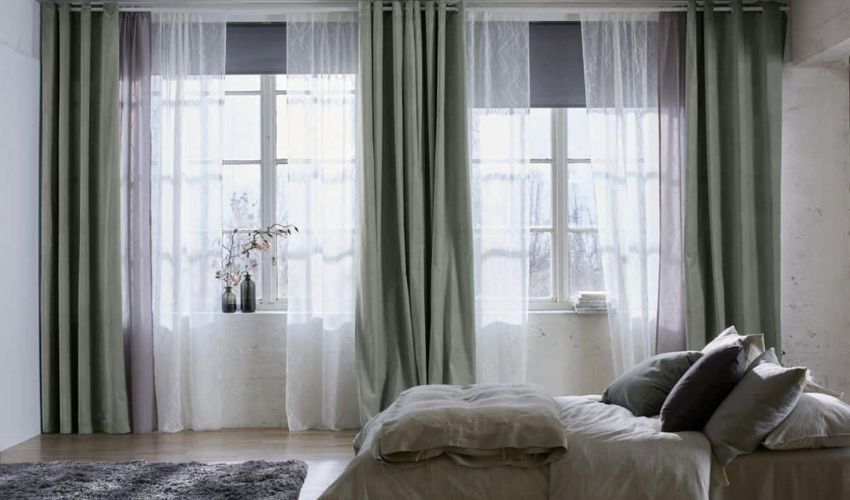
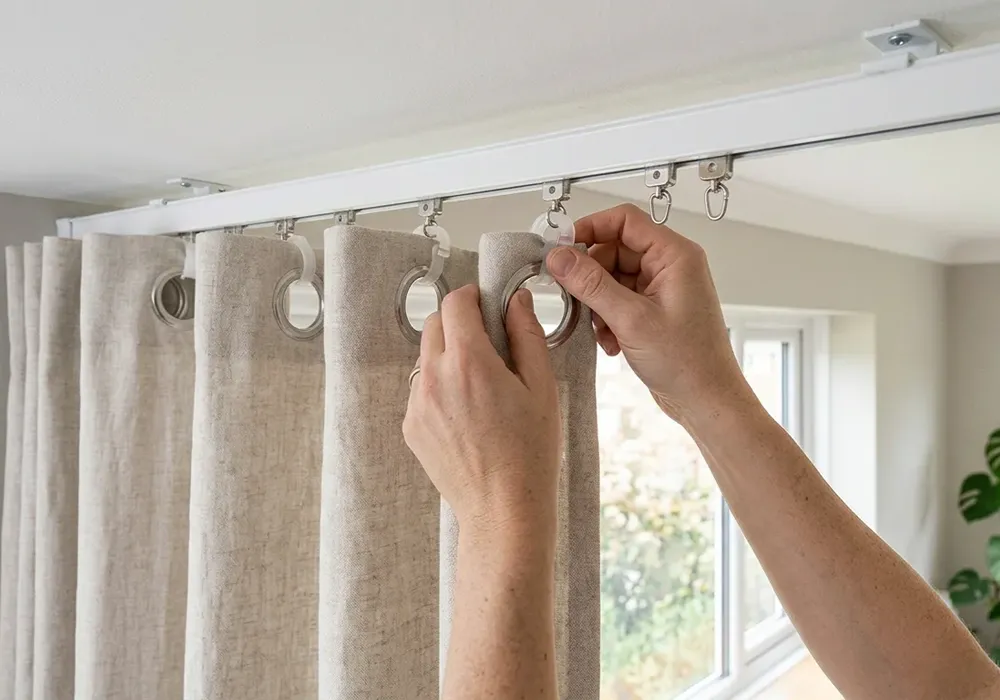
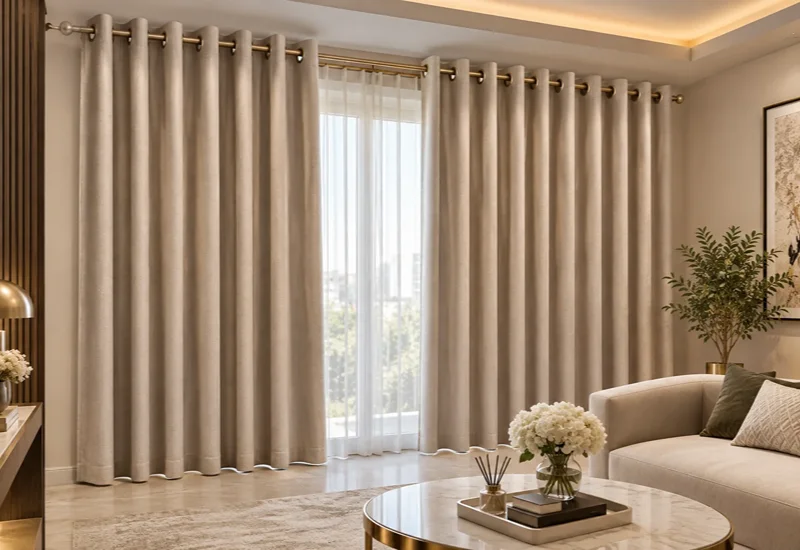
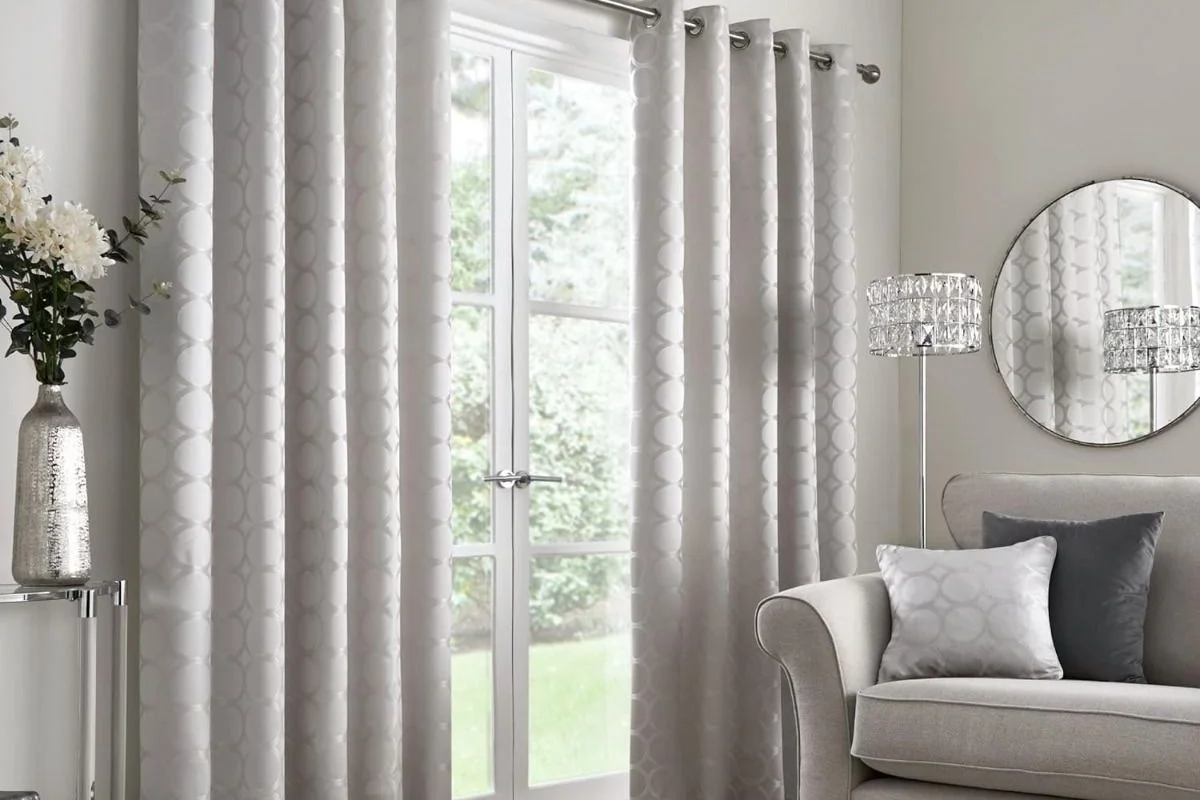
Eyelet curtains feature circular metal rings fitted into reinforced openings along the top of the fabric. These rings slide directly onto a curtain pole, allowing the fabric to hang in soft, rounded folds.
Their heading design gives curtains a more defined appearance, with visible rings adding a decorative detail. Eyelet curtains are available in different fabrics, patterns and colours, making them suitable for various interior styles. They are commonly used in bedrooms, living rooms and other residential spaces.
Key Features of Eyelet Curtains
- Circular metal rings: Create the distinctive eyelet heading.
- Curtain pole installation: Hang directly from a compatible pole.
- Defined folds: Form rounded fabric waves when suspended.
- Decorative appearance: Add a noticeable detail to the top of the curtains.
- Different fabric options: Work with various materials, depending on their weight and construction.
Wave Curtains vs Eyelet Curtains: Key Differences
Although both styles create folds in curtain fabric, their construction and hanging methods are different. Wave curtains use a specialised track to produce consistent curves, whereas eyelet curtains hang from a pole through circular rings.
| Feature | Wave Curtains | Eyelet Curtains |
| Heading Style | Continuous wave folds | Circular ring heading |
| Hanging System | Compatible curtain track | Curtain pole |
| Appearance | Smooth and uniform | Defined and rounded |
| Fabric Folds | Soft, evenly spaced waves | Deeper, structured folds |
| Opening Style | Slides along the track | Slides along the pole |
| Installation | Requires a suitable track system | Requires a compatible curtain pole |
| Interior Style | Modern and minimalist | Modern, classic and casual |
| Fabric Options | Sheer, linen, polyester and other suitable fabrics | Sheer, cotton, velvet and other suitable fabrics |
| Best Applications | Large windows and contemporary spaces | Bedrooms, living rooms and standard windows |
| Overall Look | Clean and streamlined | Decorative and distinctive |
The main difference is the heading and hanging mechanism. Your choice should depend on the finish you want and the installation system that suits your windows.
Advantages and Disadvantages of Wave Curtains
Wave curtains offer a consistent appearance that works particularly well in modern interiors. Their flowing folds create a balanced look without making the window treatment appear overly decorative.
Advantages of Wave Curtains
- Consistent appearance: Their evenly spaced folds maintain a uniform arrangement across the window.
- Contemporary design: Suit modern homes, apartments and minimalist interiors.
- Suitable for wide windows: Can create a continuous finish across larger window openings.
- Neat stacking: Form organised folds when drawn to one side.
- Track compatibility: Can be installed with suitable ceiling-mounted or wall-mounted track systems.
Disadvantages of Wave Curtains
- Specialised hardware: Require a compatible wave curtain track and heading tape.
- Correct spacing: The track glider spacing and curtain construction must work together to create the intended folds.
- Installation requirements: Accurate measurements and fitting are important for an even finish.
- Stacking space: The folded fabric still requires sufficient space when the curtains are fully open.
Advantages and Disadvantages of Eyelet Curtains
Eyelet curtains are a practical option for homeowners who prefer a decorative heading with clearly defined fabric folds. Their pole-based installation also makes them a familiar choice for many residential interiors.
Advantages of Eyelet Curtains
- Simple hanging system: Slide onto a compatible curtain pole without requiring specialised heading tracks.
- Decorative finish: Visible metal rings add a distinctive detail to the curtain design.
- Defined folds: Create rounded fabric folds that give the window a structured appearance.
- Versatile designs: Available in plain, textured and patterned fabrics.
- Residential suitability: Work well in bedrooms, living rooms and other everyday spaces.
Disadvantages of Eyelet Curtains
- Pole requirements: Need a suitable curtain pole with the correct diameter for the eyelets.
- Limited heading options: The circular rings create a specific appearance that may not suit every interior.
- Fabric arrangement: The folds may appear less uniform than those of a properly installed wave curtain.
- Stacking space: The gathered fabric takes up space at the sides when the curtains are open.
Which Curtain Style Is Better for Different Rooms?
The best curtain heading depends on the room’s design, window dimensions and practical requirements. Both options can work in different spaces, but their appearance and installation methods may make one more suitable than the other.
Wave Curtains for Living Rooms
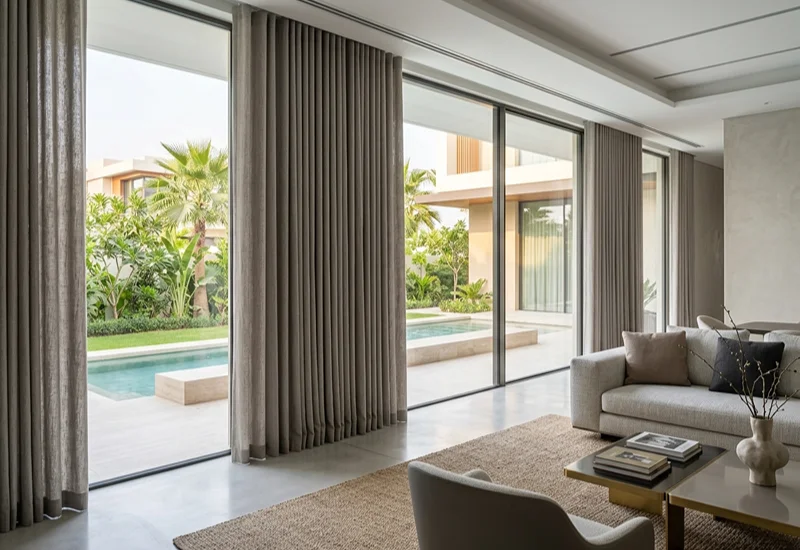
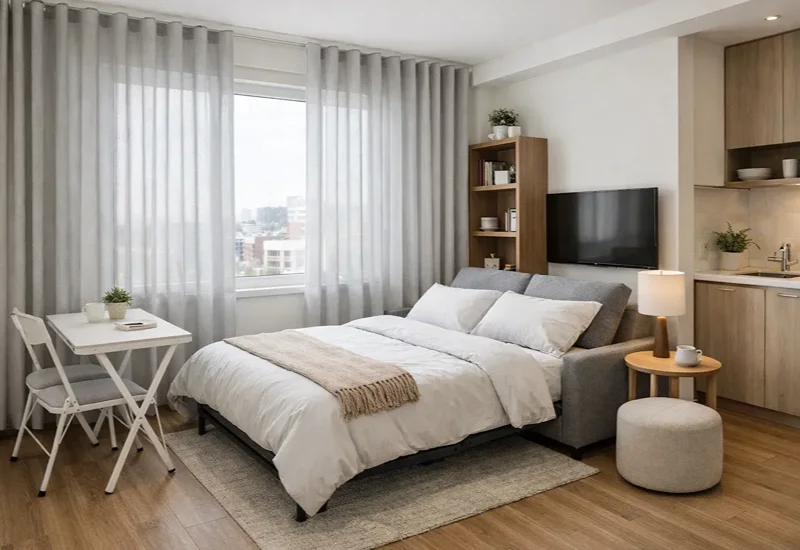
Wave curtains are a suitable choice for living rooms with contemporary furniture and simple interior designs. Their continuous folds create a balanced appearance, particularly when installed across wide windows or from ceiling to floor. They can also complement sheer fabrics when you want natural light to enter the room while maintaining some daytime privacy.
Eyelet Curtains for Bedrooms
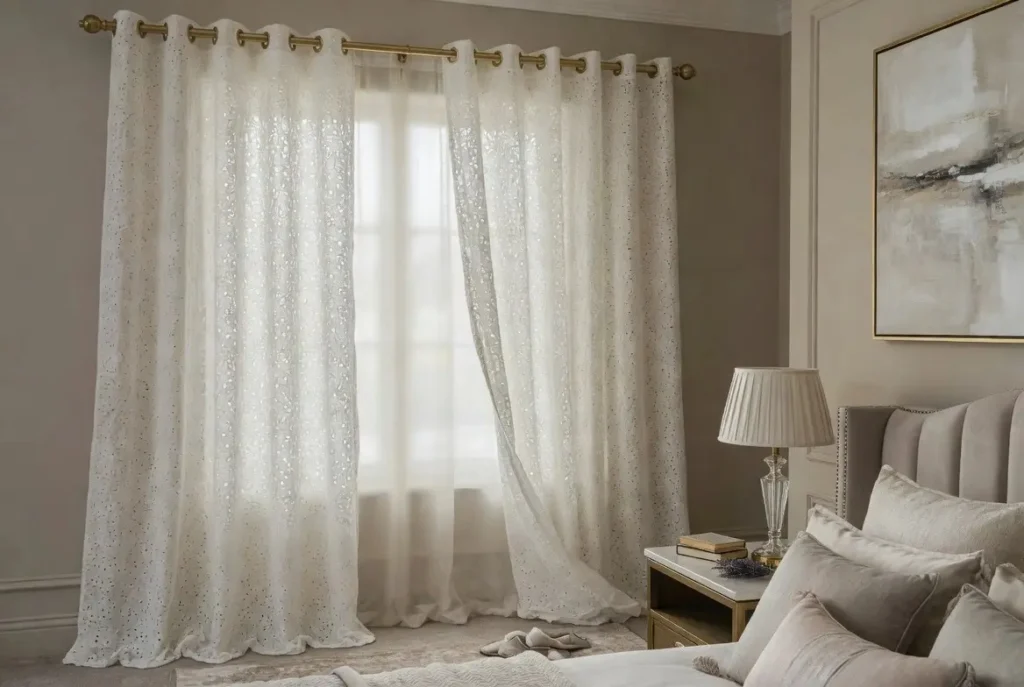
Eyelet curtains can work well in bedrooms where a decorative and comfortable appearance is preferred. Their rounded folds create a structured finish, while thicker fabrics and suitable linings can help manage incoming light and improve privacy. Their appearance can also complement different bedroom furniture styles.
Wave Curtains for Large Windows
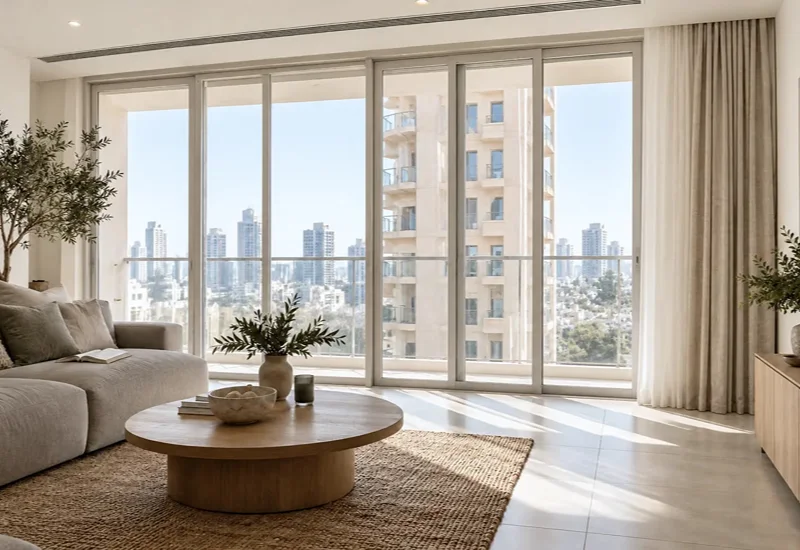
Wave curtains are particularly suitable for large windows because their consistent folds create a continuous visual effect. They can be installed across wide openings using an appropriately sized track system. This makes them worth considering for floor-to-ceiling windows and modern open-plan spaces.

Eyelet Curtains for Smaller Windows
Eyelet curtains can be a practical option for smaller and standard-sized windows. Their pole-based installation provides a familiar hanging arrangement, and the fabric can be pulled across the window when needed. Selecting an appropriate fabric weight and pole size helps achieve a balanced appearance.
Wave and Eyelet Curtains for Modern Interiors
Both styles can complement modern interiors, although they create different effects. Wave curtains offer a minimal and streamlined finish, while eyelet curtains introduce visible rings and more defined folds. Consider your furniture, window frames and overall room design before choosing between them.
What Should You Consider Before Choosing?
Before selecting wave or eyelet curtains, consider the following factors to ensure the style works with your windows and interior requirements.
1. Window Dimensions and Available Space
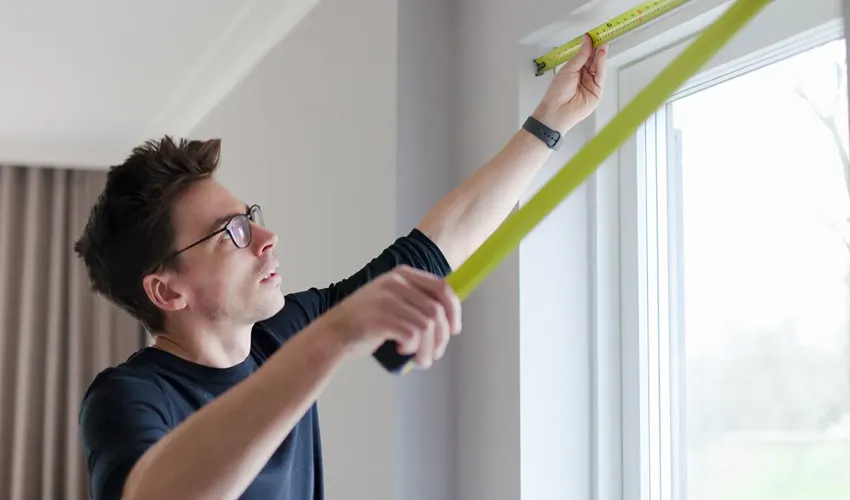
Measure the window width and height before selecting a curtain style. Large windows may benefit from the continuous appearance of wave curtains, while eyelet curtains can suit standard window openings. Also consider the space available at the sides for the fabric when the curtains are fully open.
2. Curtain Fabric and Weight
Fabric selection affects how both styles hang and look. Lightweight materials such as sheer fabrics create softer folds, while heavier materials produce a fuller appearance. Check that the selected fabric is suitable for the chosen heading and its supporting hardware.
3. Track or Pole Compatibility
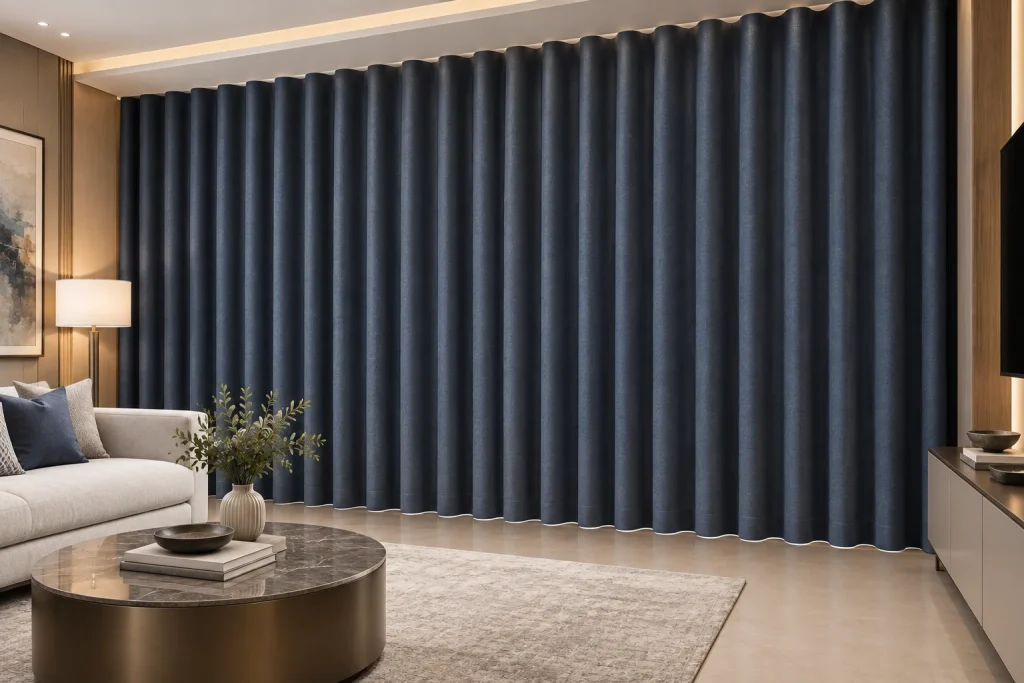
Wave curtains require a compatible track system with the correct gliders and spacing. Eyelet curtains need a pole that fits their ring openings. Check the installation requirements before purchasing the fabric or hardware.
4. Desired Folds and Overall Appearance
Think about the visual effect you want to achieve. Wave curtains provide consistent curves along the entire width, whereas eyelet curtains create more pronounced rounded folds. Your preferred appearance can help narrow down the options.
5. Light Control and Privacy
The heading style alone does not determine how much light or privacy a curtain provides. Fabric thickness, lining and overall coverage are more important factors. Blackout lining can help reduce incoming light, while sheer materials allow more daylight into the room.
6. Interior Design and Furniture Style
Consider the colours, textures and furniture already present in your room. Wave curtains complement clean and minimalist interiors, while eyelet curtains can work with both contemporary and traditional furniture. Choose a style that fits naturally with the rest of the space.
7. Installation and Maintenance
Consider the installation requirements and cleaning instructions before making a decision. Both styles need appropriate measurements and hardware. The fabric’s care instructions should guide how frequently and carefully the curtains are cleaned.
Can You Get Wave and Eyelet Curtains in Different Fabrics?
Yes, both wave and eyelet curtains are available in different fabrics, although the material should be suitable for the selected heading and hanging system. Fabric choice affects the folds, appearance, light control and overall performance of the curtains.
Some common options include:
- Linen: Provides a natural texture and relaxed appearance. It can suit both contemporary and casual interiors.
- Velvet: Offers a rich texture and fuller appearance, making it suitable for decorative and layered window treatments.
- Polyester: Available in different textures and finishes, making it a versatile option for everyday curtains.
- Sheer Fabric: Allows natural daylight to enter while adding a light layer of coverage to windows.
- Cotton: Offers a soft appearance and works with different residential interior styles.
When choosing a fabric, consider its weight, texture and care requirements. Heavier materials may need suitable support, while lightweight fabrics can create softer folds. For additional light control, you can also consider adding an appropriate curtain lining.
Wave Curtains vs Eyelet Curtains: Which One Should You Choose?
Wave curtains and eyelet curtains both offer practical ways to dress your windows, but the right choice depends on the appearance and installation you prefer. Wave curtains are a good option if you want evenly spaced folds, a clean finish and a contemporary look. They are particularly suitable for wide windows and interiors with simple design elements.
Eyelet curtains are worth considering if you prefer visible metal rings, rounded folds and a traditional pole-based hanging system. They offer flexibility in fabric and design choices, making them suitable for bedrooms, living rooms and other residential spaces.
Before making a final decision, compare the available fabrics, measurements and installation requirements. If you are exploring different best curtains in Dubai, consider options that match your window dimensions, interior style and light-control needs. Choosing the right combination of fabric and heading style will help create a practical and well-coordinated window treatment.