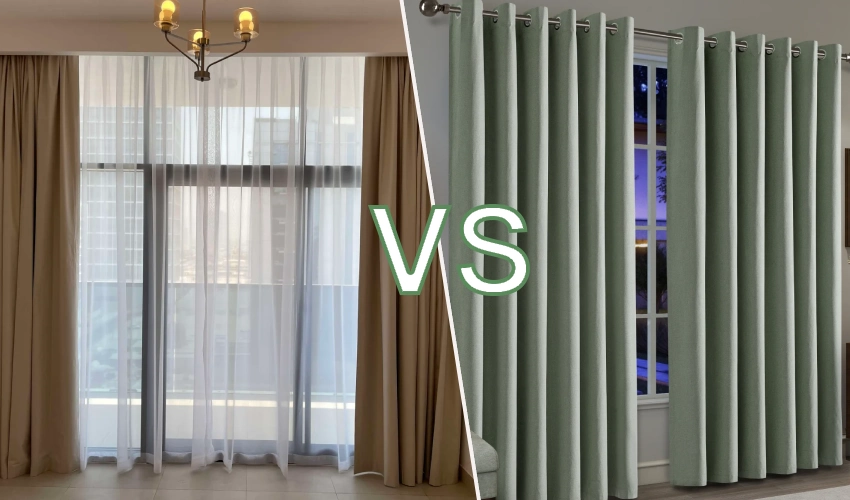


Eyelet curtains look sharp and hang in deep, even folds. They are designed for poles, though, so many people are unsure how to fit them on a track. It is easy once you know the trick.
This guide walks you through the process step by step, with tips to avoid common problems.
Can You Hang Eyelet Curtains on a Track?
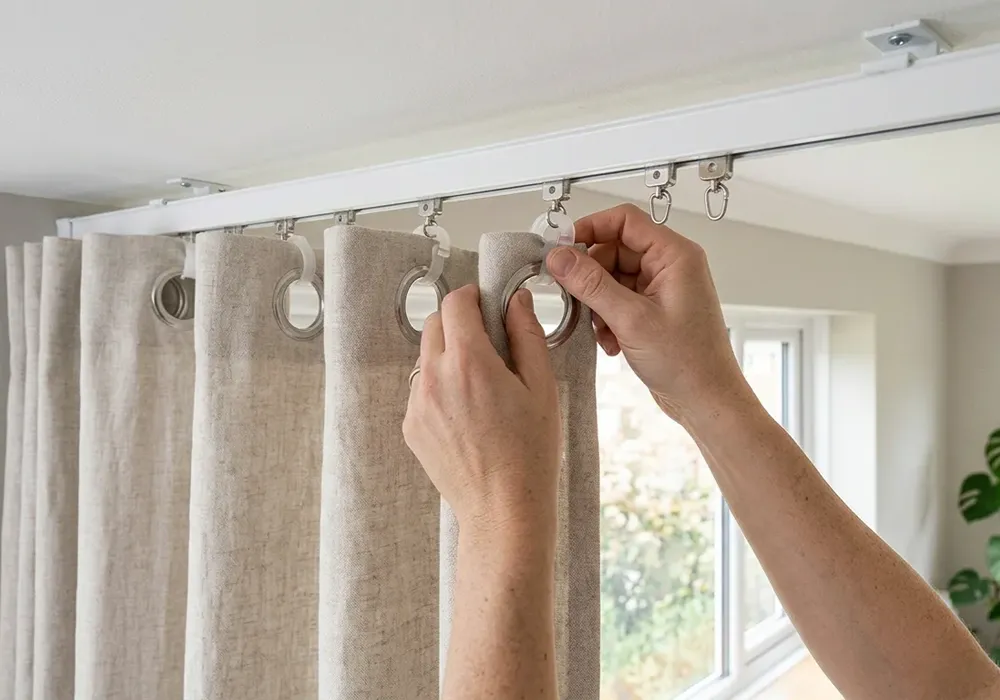
Yes, you can hang eyelet curtains on a track, but you need hooks to do it. Eyelet curtains have metal or plastic rings built into the heading. On a pole, you thread the pole through them. A track has no pole to thread, so you connect each eyelet to a glider with a hook instead.
The result is a neat, gliding curtain. The eyelet folds stay in place, and the track handles the movement.
What You Will Need
- Eyelet curtains
- A curtain track, already fitted and secure
- Track gliders
- Curtain hooks (or S-hooks) that fit through your eyelets
- A step ladder
- A tape measure
- An iron or steamer
Check your track first. If your track does not have gliders yet, or you are unsure how they fit, see our guide on installing curtain track gliders. If the track itself is not up, follow our guide to installing and hanging curtains first.
Step-by-Step: Hanging Eyelet Curtains on a Track
Step 1: Check the Track and Gliders
Make sure the track is firmly fixed and runs smoothly. Slide a glider along its full length. If it catches, fix the problem now. It is much harder to solve once the curtain is up.
Count the gliders you have. For even folds, plan for one glider per eyelet. Add spare gliders to your count if you can, so that you have enough if one is faulty.
Step 2: Prepare the Curtain
Lay the curtain flat and remove creases before hanging. Creases hang badly and can be hard to remove once the curtain is up. Steam or iron it following the care label.
Count the eyelets on each panel. This tells you how many hooks and gliders you need. Keep the same number on every panel so the curtains hang evenly.
Step 3: Attach Hooks to the Eyelets
Thread one hook through each eyelet. Work along the heading from one end to the other. Make sure every hook faces the same way. If some hooks face front and others back, the heading will look messy.
Use hooks that fit the eyelet size properly. A hook that is too thin can slip out. One that is too thick can strain the ring.
Step 4: Connect the Hooks to the Gliders
Clip or hook each curtain hook onto a glider. Start at one end of the panel and work across. Keep the curtain lifted as you go so the fabric does not drag.
Fit the end gliders last, according to your track’s design. Once all hooks are attached, the curtain should hang from the track without any strain on a single point.
Step 5: Adjust the Spacing
Spread the gliders evenly along the track. Slide them so the curtain is fully open and gathered neatly at one side. Then pull it across. The folds should look even, with no gaps or bunching.
If one section looks tight or loose, move that hook to the correct glider position and check again.
Step 6: Check the Drop and Test the Movement
Step back and look at the curtain from across the room. The hem should hang level, either just above the floor or just touching it, depending on the look you want. If the length looks wrong, see our guide on custom-made vs ready-made curtains for advice on getting a better fit next time.
Now open and close the curtain several times. It should move smoothly without snagging or pulling.
Troubleshooting Common Problems
The curtain sticks or drags. Check that the track is clean and that the gliders are seated properly. Uneven hook placement can also cause drag.
The folds look uneven. Recheck that you have one hook per eyelet and that all hooks face the same way. Redistribute the gliders along the track.
Hooks keep slipping out. Switch to hooks that better match your eyelet size.
Light shows at the top. A gap between the heading and the track is normal with eyelet curtains on a track. Consider adding a pelmet to hide the track and close the gap. See how to make a curtain pelmet.
Tips for a Neater Finish
- Hang after ironing, not before. Creases settle in fast once the curtain is up.
- Use identical hooks throughout. Mixing styles gives an uneven look.
- Do not overload the track. Heavy curtains need a track and gliders that can support the weight. Check your track’s guidance before hanging heavy fabric.
- Keep the track clean. Dust builds up quickly and slows the gliders. Wipe it regularly, and follow our tips on cleaning and maintaining curtains.
FAQs
Can I hang eyelet curtains on any curtain track?
Most tracks work, provided they use gliders that accept hooks. Check that your gliders have an eye or loop you can hook onto.
Do I need one glider for every eyelet?
One glider per eyelet gives the most even folds. Fewer gliders can work, but the curtain may not gather as neatly.
Are eyelet curtains better on a pole or a track?
Both work, but they look different. A pole shows off the eyelets and lets the curtain slide freely. A track gives a cleaner, more hidden look. Choose based on the style you want.
Can I use a double track with eyelet curtains?
Yes. You can hang a sheer layer and a heavier layer on separate tracks. If your setup has hardware issues, see how to fix double curtain rods.
Final Thoughts
Hanging eyelet curtains on a track is simple when you have the right hooks. Check your track, match one hook and glider to each eyelet, and space everything evenly. The result is a smooth, tidy curtain that opens and closes without fuss.
Need help choosing curtains or hardware for your windows? Browse our collection or contact our team for advice.