

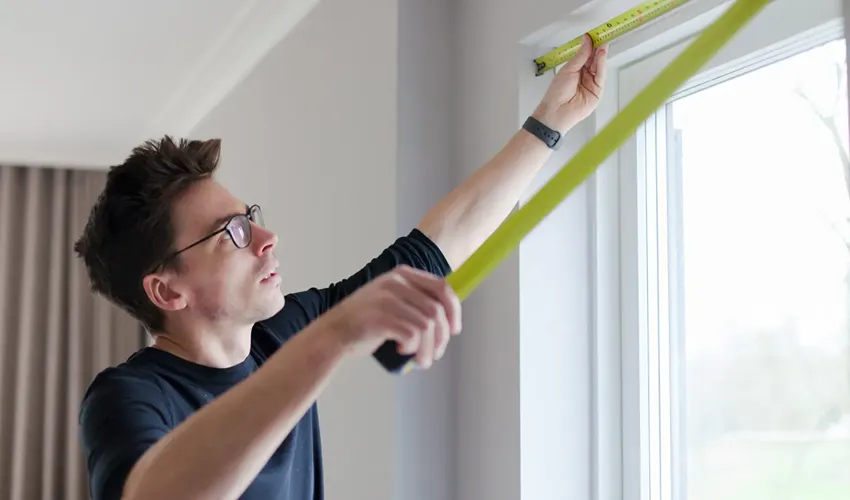
Buying curtains starts with one simple task: getting the measurements right. The size of your window is only part of the calculation. You also need to think about where the curtain will hang, how much fabric you want across the window, and where the finished curtain should stop.
This guide shows you how to take curtain measurements from start to finish. You will learn how to work out curtain width and length, measure for a curtain rod, and calculate the size of two curtain panels.
What You Need to Measure Curtains
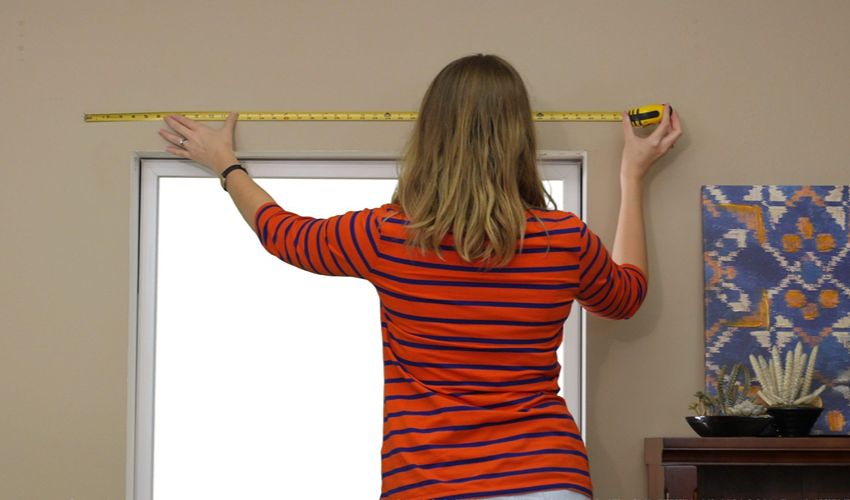
You do not need special equipment for most curtain measurements. Keep these items nearby:
- A metal tape measure
- A pen and paper
- Your phone for recording measurements
- A step stool for high windows
Write down every measurement as soon as you take it. If you have several windows, label each measurement by room and window so you do not mix them up later.
For large or high windows, having another person hold the tape can make the process easier.
How to Measure a Window for Curtains
Start by looking at the window and deciding how you want the curtains to sit around it.
If a curtain rod or track is already fitted, use its usable width as your main reference. If there is no fitting yet, measure the window first and use that measurement when deciding where the rod or track should go.
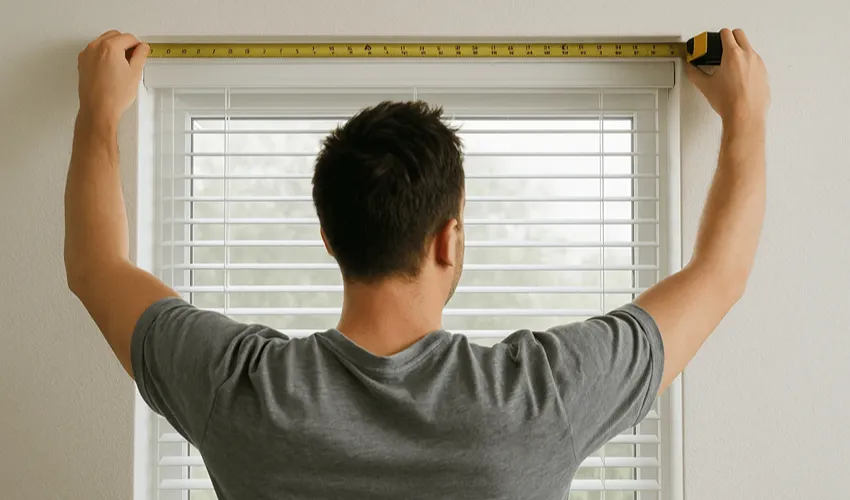
Measure the window from left to right. Then measure from the top of the window to the bottom.
These numbers help you understand the size of the opening. They do not automatically become the final curtain dimensions.
Your curtain may need to extend beyond the window depending on the position of the fitting and the amount of wall you want covered.
How to Measure Curtain Width
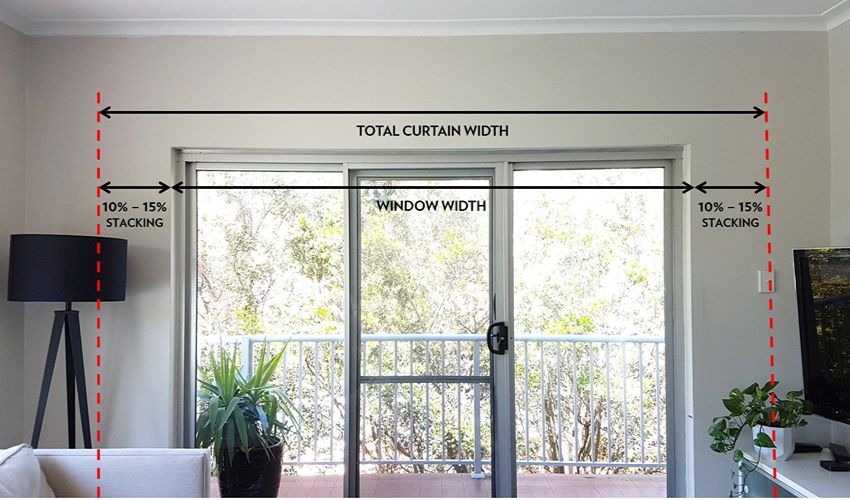
Curtain width is the amount of fabric needed across the window when the curtains are closed.
First, find the width that the curtains need to cover. If your rod or track is already fitted, measure the usable section from one side to the other.
Next, decide how much fabric you want in relation to that width. Curtains are normally wider than the area they cover because the fabric needs room to form folds.
A simple width formula
Use this calculation:
Required fabric width = coverage width × fullness
For example, imagine the curtain needs to cover a 250 cm wide area and you choose a 2× fullness.
250 cm × 2 = 500 cm
You would therefore need 500 cm of total curtain fabric width before dividing it between the panels.
The right fullness depends on the curtain heading, fabric and appearance you want. A lightweight curtain can be treated differently from a heavier lined curtain, so do not use one number for every type of curtain.
How to Measure for 2 Curtains
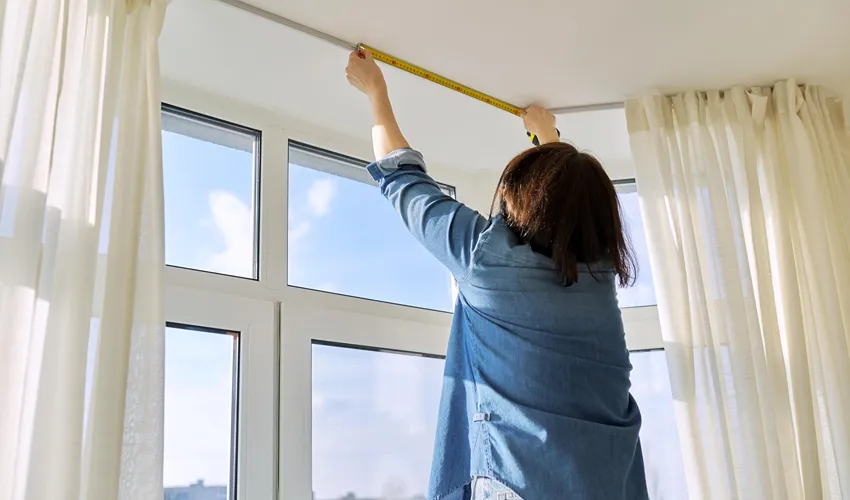
If your window will have one curtain opening to the left and another opening to the right, calculate the complete width first.
For example:
Required total width: 500 cm
Number of panels: 2
500 cm ÷ 2 = 250 cm
In this example, each panel would need a finished width of 250 cm.
The important part is to calculate the total fabric requirement before splitting it between the two sides. Dividing the window measurement alone can give you panels that do not provide enough fabric.
How to Measure Curtain Length
Curtain length is measured vertically. The starting point depends on the type of curtain fitting you are using.
If the curtain hangs directly from a rod, measure from the appropriate hanging point on the rod. If hooks, rings or another heading system are involved, the starting point may be slightly different.
Then choose where you want the curtain to finish.
Curtains Ending at the Windowsill
For a short curtain, measure from the hanging point down to the sill.
This gives you the basic drop needed for a sill-length design.
Curtains Finishing Below the Sill
You can also let the curtain continue below the sill. In this case, measure from the hanging point to the exact position where you want the fabric to end.
This is useful when you want more coverage without using a full-length curtain.
Floor-Length Curtains
For a floor-length curtain, take the measurement from the curtain’s hanging point down towards the floor.
Check the distance at more than one position along the window. Floors may have small changes in level, which can affect the finished appearance.
Decide in advance whether you want the fabric to stop just above the floor, meet the floor, or continue slightly onto it. Your chosen finish should be reflected in the final length you order.
Puddle-Length Curtains
Puddle-length curtains are intentionally longer than the distance from the hanging point to the floor. Some of the material rests on the floor.
There is no single extra length that suits every room. The final amount depends on the appearance you want, the fabric and the curtain construction.
How to Measure for Curtain Rods
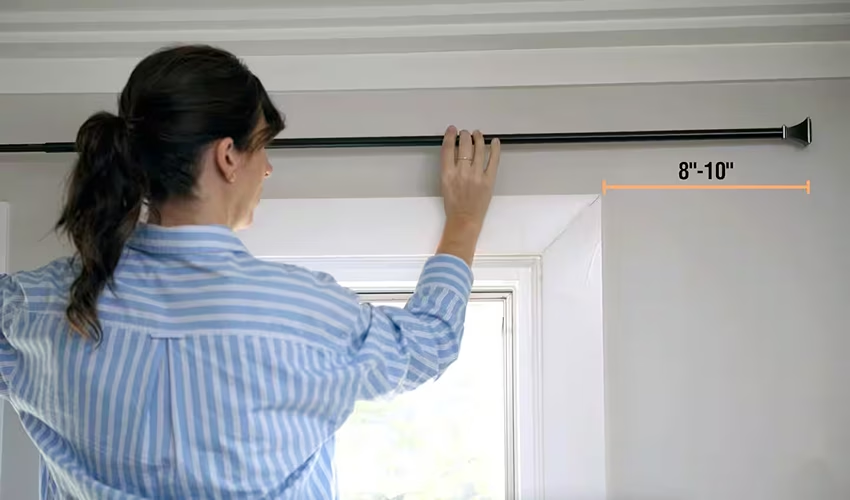
The curtain rod plays an important role in determining your final curtain size.
If you are installing a new rod, first decide how far it should extend around the window. The rod does not have to stop exactly where the window frame stops.
The position should give the curtains enough room to sit beside the window when open and enough coverage when closed.
Rod Width
Measure the section of the rod that the curtains will actually use.
Do not include decorative end pieces if they are not part of the area where the curtains move.
If the rod is not installed yet, establish its intended width before ordering the curtains.
Rod Height
The rod height determines the starting point for your curtain-length measurement.
Mark the intended rod position and then measure vertically down to your chosen finishing point.
If you change the rod position after taking the measurement, measure the length again. Even a small change at the top can alter the finished curtain length.
How to Measure Curtains for Different Hanging Styles
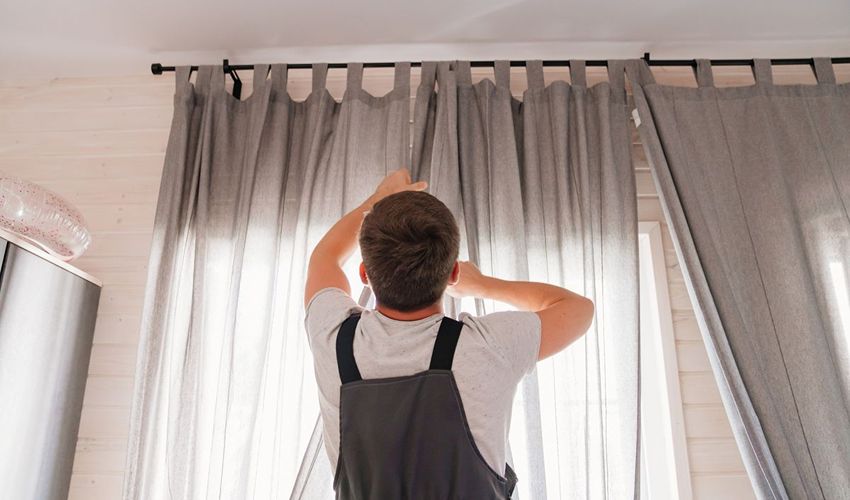
Different curtain headings can change the point from which you measure.
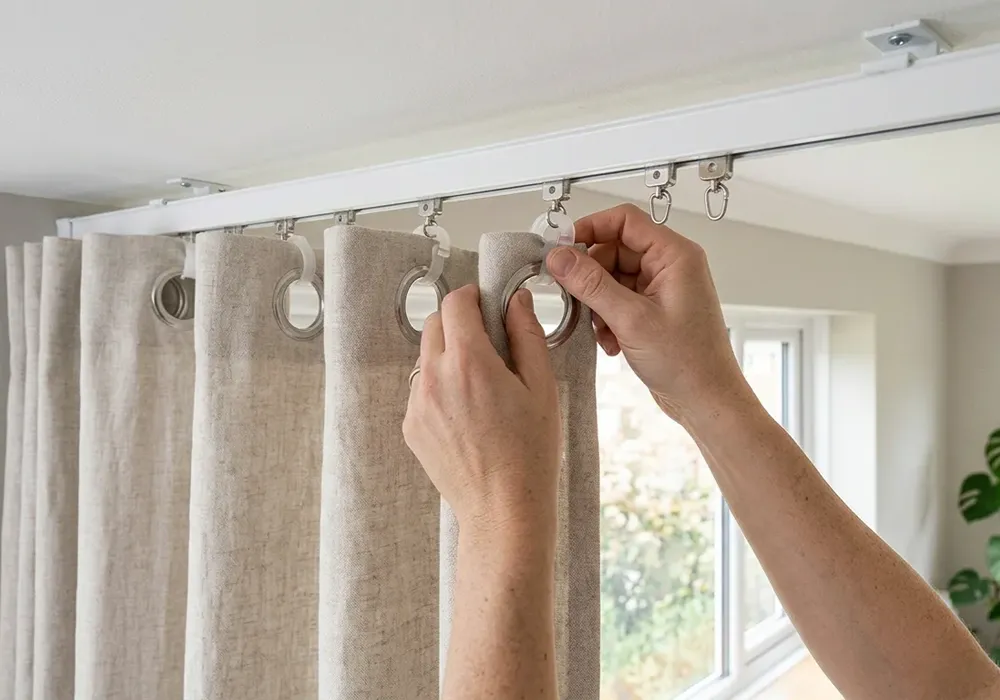
Curtain Rings
With rings, identify where the curtain attaches to the ring. Use that point as the beginning of your length measurement.
Rod Pockets
For a rod-pocket curtain, consider the position of the rod inside the fabric pocket. The top edge of the fabric is not necessarily the same as the point from which the finished drop should be calculated.
Grommets or Eyelets
For eyelet curtains, check how the fabric sits around the rod. The eyelet position affects where the curtain begins when it is hanging.
Tab Tops
For tab-top curtains, use the point where the tabs sit on the rod as your reference.
If you are ordering made-to-measure curtains, always confirm the supplier’s measurement method for the selected heading before giving them your final dimensions.
Curtain Measurement Formula
Keeping the calculations separate makes curtain sizing easier.
Width
Coverage width × chosen fullness = total curtain width
Two Panels
Total curtain width ÷ 2 = width required for each panel
Length
Hanging point to chosen finishing point = curtain drop
For example, if your required coverage is 180 cm and you select 2× fullness:
180 × 2 = 360 cm total width
For two equal panels:
360 ÷ 2 = 180 cm per panel
These calculations give you a starting point. The actual curtain construction and heading may affect the final specification.
Common Curtain Measuring Mistakes to Avoid
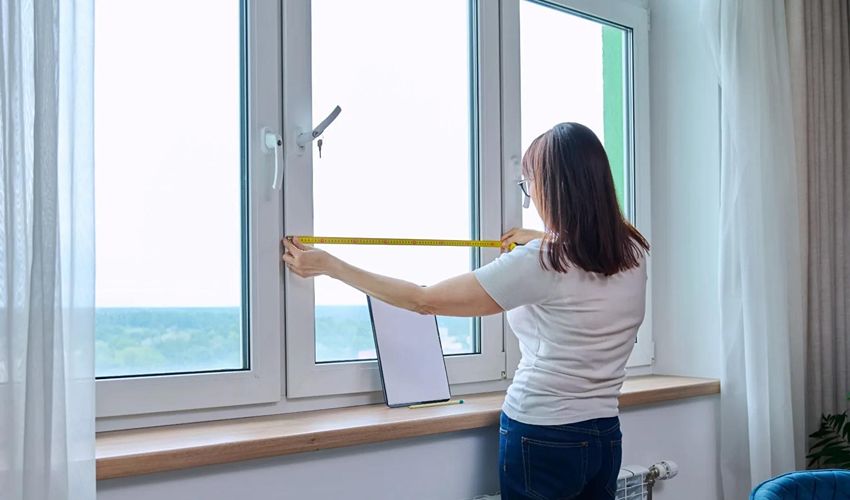
Measuring only the window opening
The window opening tells you its size, but your curtains may cover a larger area depending on the rod position and desired coverage.
Choosing the panel width before calculating total width
Work out the overall fabric requirement first. Then decide how many panels you need.
Forgetting the hanging point
Curtain length should start from where the curtain actually hangs, not from an unrelated point on the wall or window.
Taking only one height measurement
A floor may not be perfectly level. Checking more than one point can help you spot differences before the curtains are made.
Mixing centimetres and inches
Choose one unit and use it throughout your measurements. Mixing units creates unnecessary opportunities for mistakes.
Measuring one window and copying the result
Windows can differ even within the same room. Measure each one separately before ordering.
Curtain Measurement Chart
| What to measure | Measurement to record | Used for |
| Window width | Left edge to right edge | Understanding the opening |
| Window height | Top to bottom | Understanding the window size |
| Rod or track width | Usable curtain area | Working out fabric width |
| Hanging height | Actual curtain starting point | Working out the drop |
| Desired finishing point | Sill, below sill or floor | Setting curtain length |
| Total fabric width | Coverage × fullness | Overall curtain size |
| Panel width | Total width ÷ number of panels | Individual curtain size |
Frequently Asked Questions
How do you measure curtains?
Measure the horizontal area the curtains need to cover and the vertical distance from their hanging point to the desired finishing point. Add the required fullness to the width calculation and split the result between the panels if necessary.
How do you measure curtain size?
Curtain size is based on the required width and finished drop. Calculate the width from the coverage area and chosen fullness, then measure the vertical distance to the point where you want the curtain to finish.
How do you take curtain measurements?
Record the width and height separately for every window. If the fitting is already installed, measure the usable rod or track and use the actual hanging point when working out the drop.
How do you measure windows for curtains?
Measure the window width and height first, then consider the position and size of the curtain fitting. The final curtain dimensions can be different from the window dimensions.
How do I measure a window to put 2 curtains?
Calculate the complete curtain width first and then divide it between the two panels. For example, 400 cm of total required fabric divided between two equal panels gives 200 cm per panel.
Final Checklist Before Ordering Curtains
Before you confirm your curtain order, check each of these points:
- Have you measured every window separately?
- Do you know the usable rod or track width?
- Have you decided where the curtain will hang?
- Have you chosen the desired finishing point?
- Have you allowed enough width for the selected fullness?
- Have you calculated the total fabric width?
- If using two panels, have you divided the total width correctly?
- Are all measurements written in the same unit?
- Have you checked the measurement method for your curtain heading?
Taking a few extra minutes to check the figures can prevent an incorrect curtain size. Keep your measurements together and confirm them against the curtain supplier’s requirements before production or purchase.